India sits along some of the busiest shipping lanes in the world, with a long coastline and a network of major ports fronting both the Arabian Sea and the Bay of Bengal. Mumbai and Jawaharlal Nehru Port (JNPT, also known as Nhava Sheva) anchor the west coast, with Cochin, New Mangalore and Kandla (Deendayal) extending the options, while Chennai, Visakhapatnam and Paradip carry the eastern trade, and Port Blair serves the Andaman and Nicobar Islands. For owners and operators moving tankers, container ships, bulk carriers and offshore units through these waters, dependable and class-compliant ship repair capability at Indian ports is a commercial necessity rather than a convenience.
This guide sets out what to plan for when arranging repairs at Indian ports, from routine afloat maintenance to survey-driven steel and machinery work, and how the vessel's regulatory position shapes the scope.
Afloat repairs versus dry-docking
Most in-service defects can be handled afloat, alongside a berth or at anchorage, without lifting the vessel out of the water. Pump overhauls, cooler cleaning and pressure testing, valve and pipework renewals, and running-gear repairs are all routinely completed within a normal port call. ARCSHIP's marine mechanical solutions and engine overhauling teams are structured for exactly this kind of fast, alongside intervention while a vessel is on the berth at Mumbai or JNPT, or riding at anchorage waiting for a window in the working schedule.
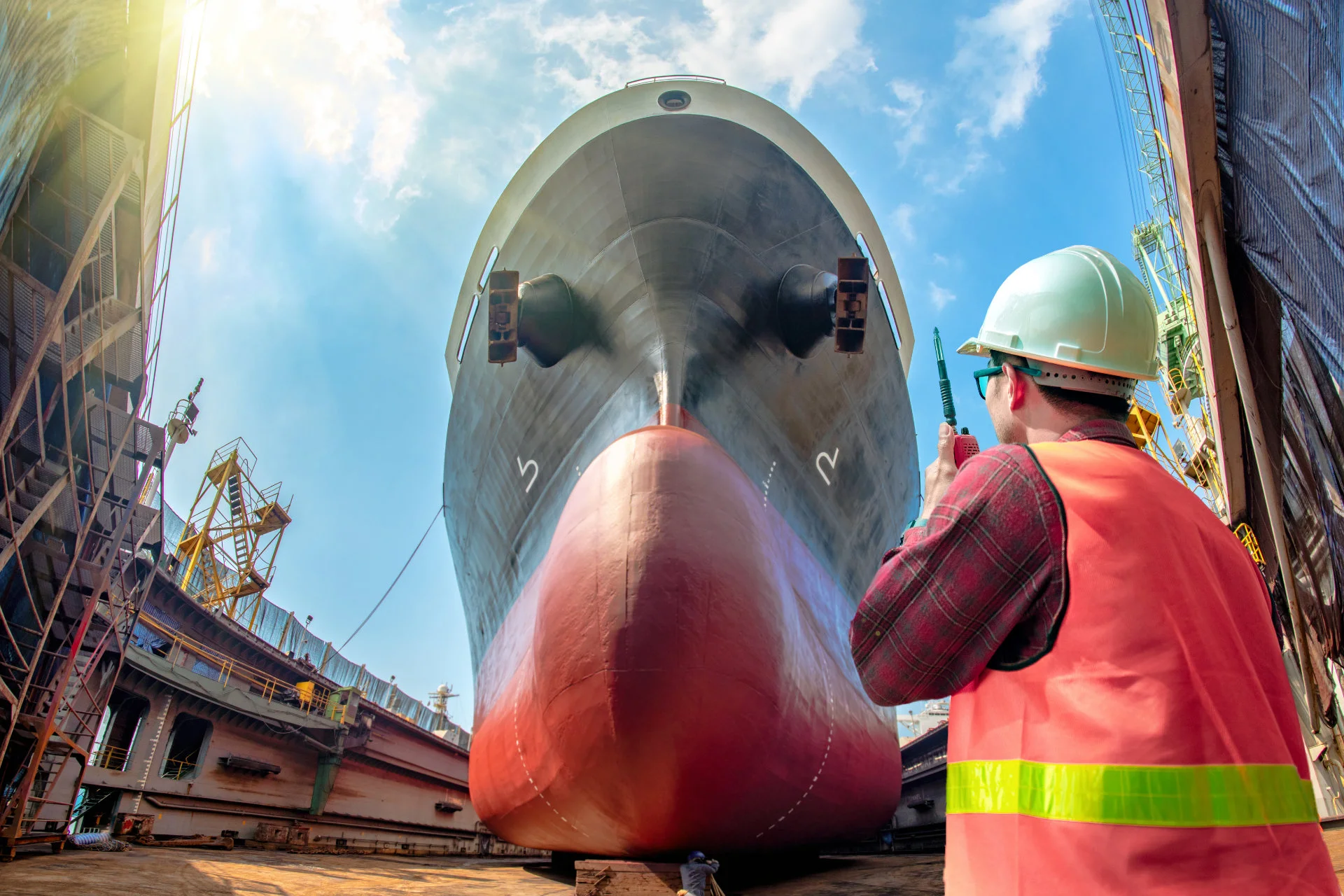
Dry-docking becomes necessary when the work reaches the underwater hull, tail shaft, rudder or sea valves, or when class calls for a docking survey. India has established dry-dock capacity on both coasts, but slots are finite and demand is seasonal, so early booking matters. Even where the docking itself takes place at a yard some distance from the vessel's trading pattern, much of the preparation, staging and post-dock commissioning can be organised locally to compress the overall schedule and reduce time out of trade.
Class and flag survey position drive the scope
The single biggest influence on a repair scope is the vessel's survey position. Classification societies, Lloyd's Register, Bureau Veritas, ABS, Korean Register, RINA, ClassNK, the Indian Register of Shipping (IRS), CCS and Tasneef among them, set the inspection and testing regime that governs when steel, machinery and safety systems must be opened up, tested and re-certified. On top of that, the flag state layers its statutory requirements under SOLAS, MARPOL, the LSA Code and the FSS Code.
For vessels calling in India, the Directorate General of Shipping (DG Shipping) and the Mercantile Marine Department (MMD) administer statutory surveys, so a repair scope should be read against both the class survey calendar and any due or overdue statutory items. Planning the work around these dates avoids duplicated attendances, keeps certificates valid, and prevents a routine call turning into a detention risk.
Repairs planned around the class and statutory survey calendar cost less and cause less off-hire than defects addressed reactively.
Planning a repair port call in India
A repair call at an Indian port rewards early preparation. Berth availability, cargo operations and customs clearance for imported spares all sit on the critical path, and the more of that is settled before arrival, the tighter the schedule can be held.
- Advise scope early. The earlier a service provider has the scope, the more spares and test equipment can be pre-positioned, and the more lead time there is for any customs clearance the parts require.
- Confirm access and permits. Hot work, enclosed-space entry and over-side work all require permits and, frequently, port and terminal approvals at the calling port, whether that is JNPT, Cochin, Chennai or Visakhapatnam.
- Align with safety servicing. A repair call is the natural moment to complete life-saving appliance and fire-fighting appliance servicing that would otherwise demand a separate attendance.
- Document everything. Condition reports, test records and class certificates protect the vessel's trading status, its statutory standing with DG Shipping and the MMD, and its resale value.
Why a single technical partner helps
Coordinating separate contractors for steel, machinery, safety equipment and calibration adds interface risk and lengthens the critical path. Bringing the work under one QHSE system, with a single point of accountability, reduces that risk and makes the schedule easier to hold within the laycan. With group offices in Navi Mumbai, Kochi, Port Blair and Udupi, ARCSHIP can mobilise to ports on either coast and keep one technical thread running from initial scope through to final class and statutory sign-off.