Saudi Arabia sits on two of the busiest shipping corridors in the world, the Red Sea and the Arabian Gulf, and its ports handle a continuous flow of tankers, container ships, bulk carriers and offshore vessels. For owners and operators, that traffic makes reliable, class-compliant ship repair capability in the Kingdom a commercial necessity, not a convenience.
This guide sets out what to plan for when arranging repairs at Saudi ports, from routine afloat maintenance to survey-driven steel and machinery work.
Afloat repairs versus dry-docking
Most in-service defects can be dealt with afloat, alongside a berth or at anchorage, without taking the vessel out of the water. Pump overhauls, cooler cleaning and pressure testing, valve and pipework renewals, and running-gear repairs are all routinely completed during a normal port call. ARCSHIP’s marine mechanical solutions and engine overhauling teams are built around this kind of fast, alongside intervention.
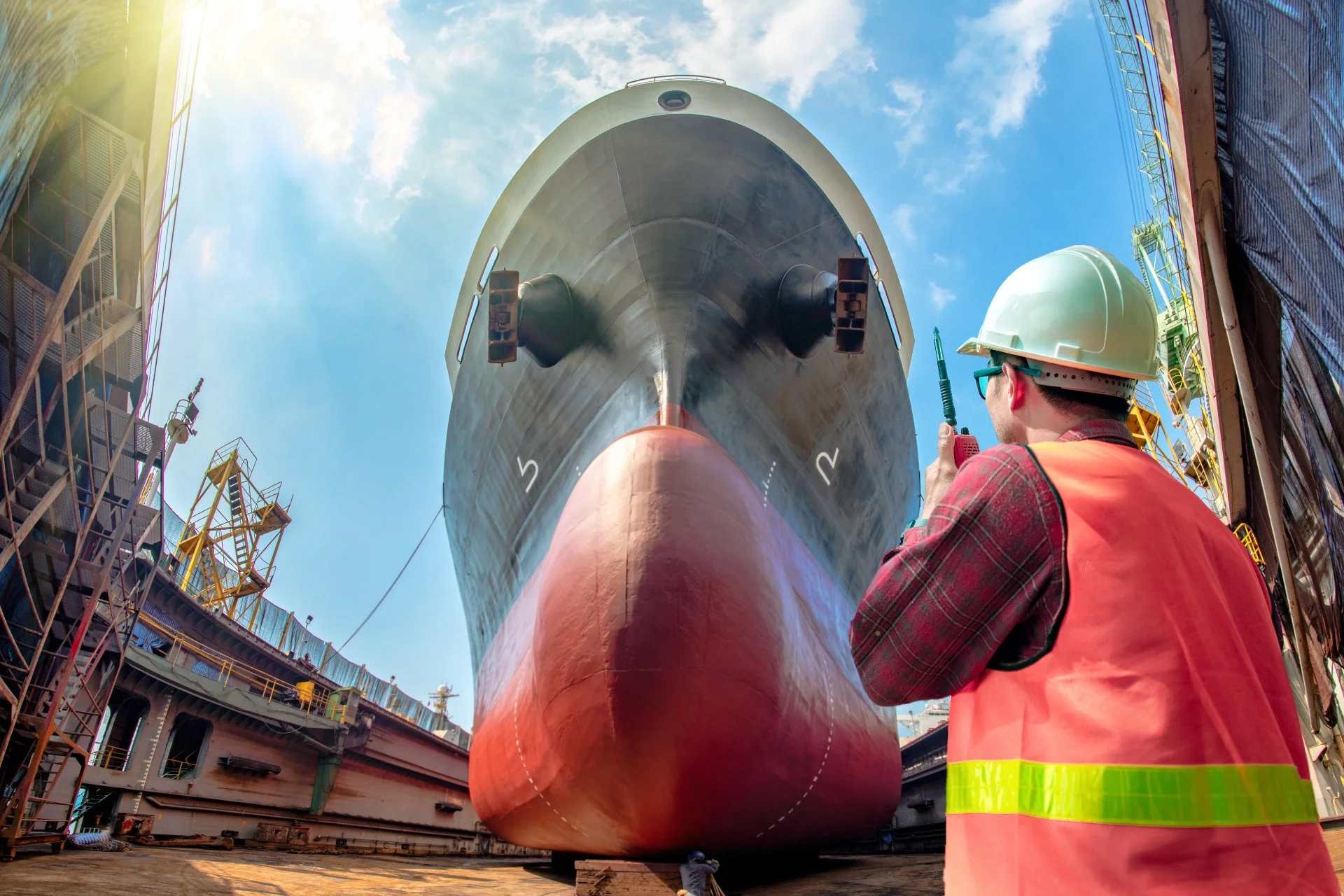
Dry-docking becomes necessary when work involves the underwater hull, tail shaft, rudder or sea valves, or when class requires a docking survey. Even where docking itself takes place elsewhere, much of the preparation, staging and post-dock commissioning can be organised locally to compress the overall schedule.
Class and flag drive the scope
The single biggest influence on a repair scope is the vessel’s survey position. Classification societies, Lloyd’s Register, Bureau Veritas, ABS, Korean Register, RINA, ClassNK, the Indian Register of Shipping, CCS and Tasneef among them, set the inspection and testing regime, and the flag state adds its own statutory requirements. Planning repairs around the survey calendar avoids duplicated attendances and keeps certificates valid.
Repairs planned around the class survey calendar cost less and cause less off-hire than defects addressed reactively.
Planning a repair port call
- Advise scope early. The more notice a service provider has, the more spares and test equipment can be pre-positioned.
- Confirm access and permits. Hot work, enclosed-space entry and over-side work all require permits and, often, port and terminal approvals.
- Align with safety servicing. A repair call is the natural time to complete life-saving appliance and fire-fighting appliance servicing that would otherwise need a separate attendance.
- Document everything. Condition reports, test records and class certificates protect the vessel’s trading status and its resale value.
Why a single technical partner helps
Coordinating separate contractors for steel, machinery, safety equipment and calibration adds interface risk and lengthens the critical path. Consolidating the work under one QHSE system, with a single point of accountability, reduces that risk and makes the schedule easier to hold within the laycan.