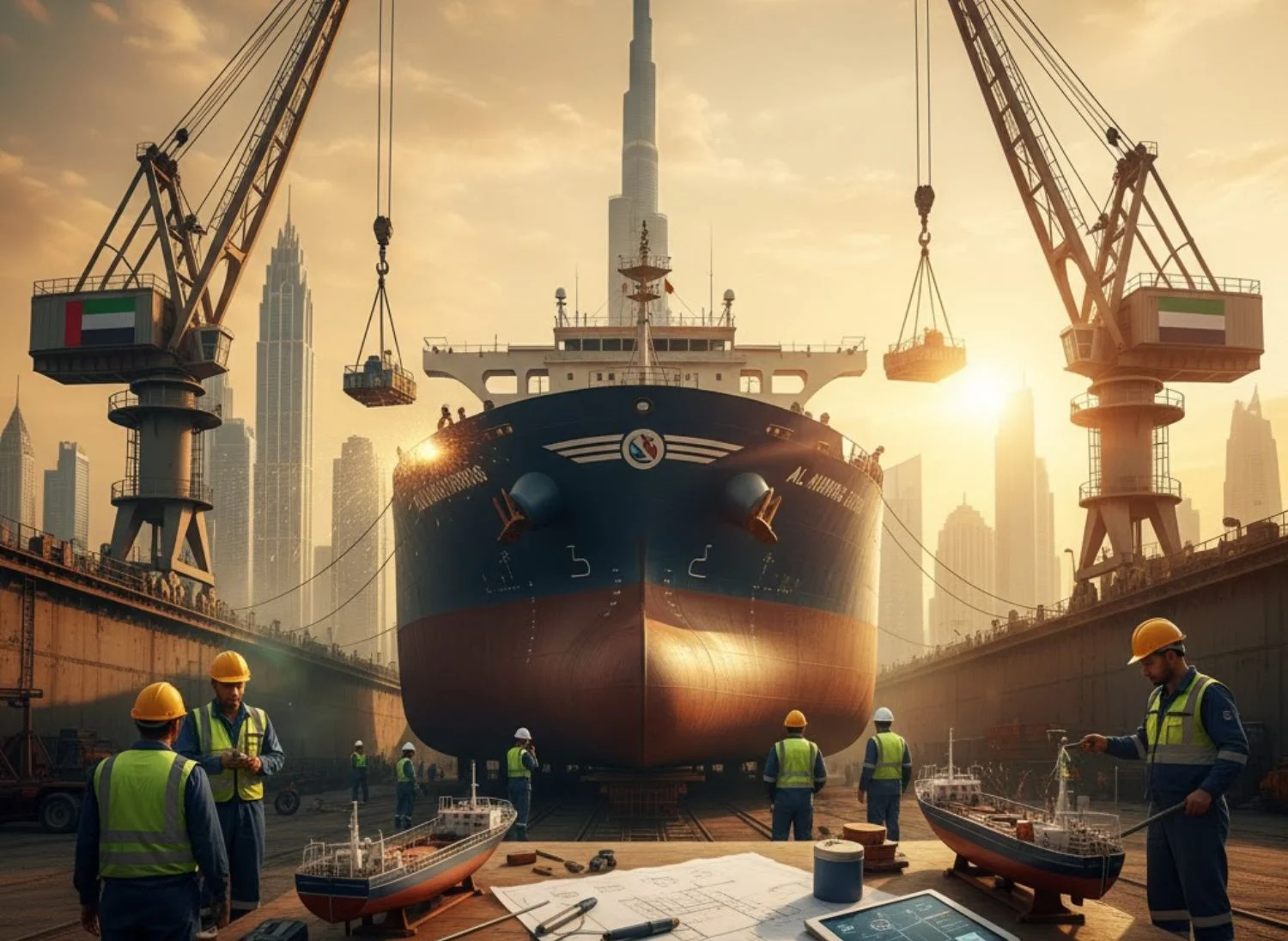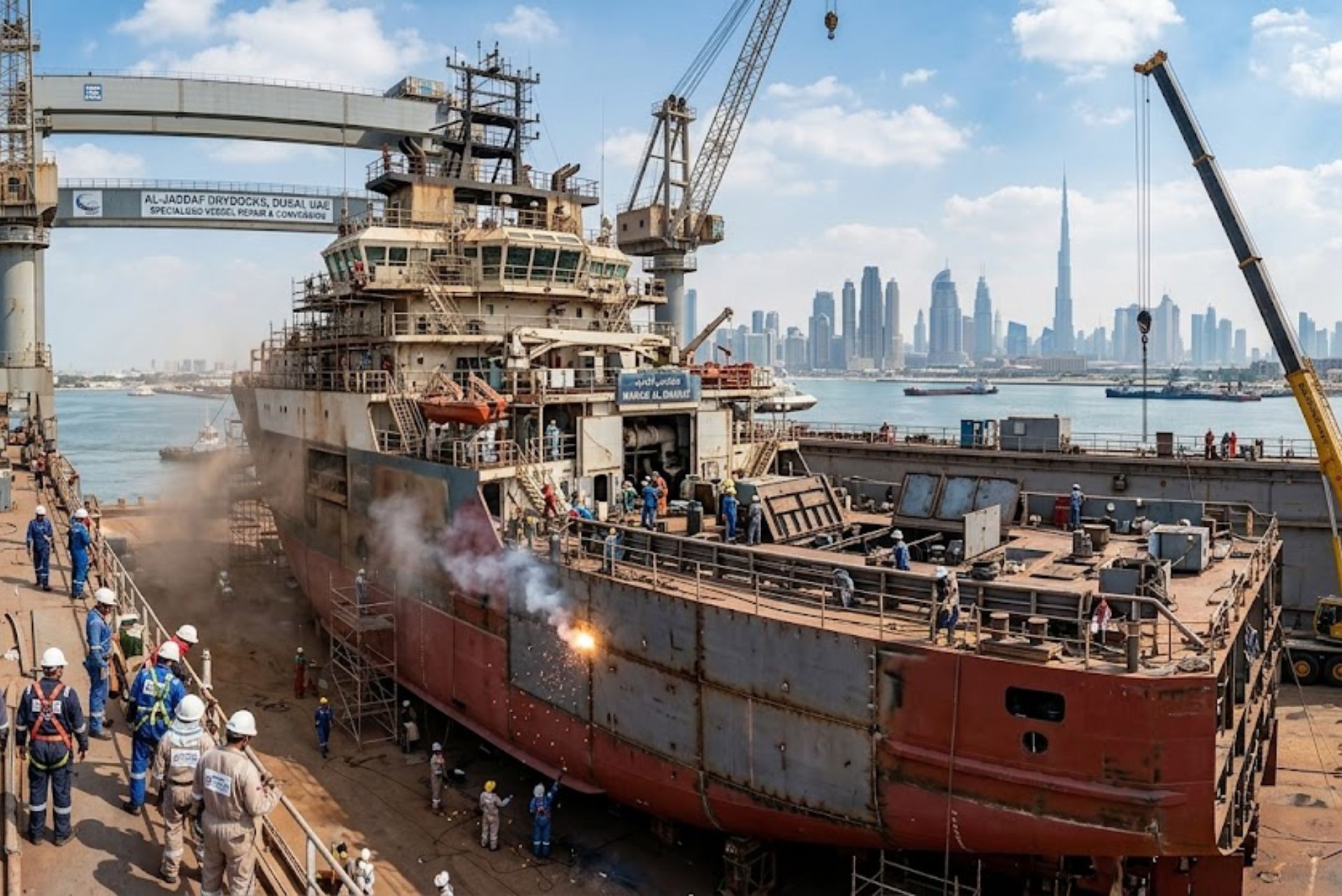
The Arabian Gulf imposes extraordinary demands on vessels operating in UAE waters. High sea temperatures, elevated salinity levels, intense UV exposure, and heavy traffic density all accelerate the deterioration of hull coatings, propulsion components, and safety-critical systems. For ship operators and technical superintendents managing fleets in the region, the early identification of developing technical problems is essential to preventing unplanned off-hire periods, regulatory detentions, and costly casualty repairs.
Below, the Arcship engineering team outlines seven critical warning signs that your vessel requires prompt attention from a qualified ship repair specialist in Dubai or the UAE.
1. Abnormal Engine Vibration or Unexpected Noise
Unexplained vibration, knocking, or irregular noise originating from the main engine, auxiliary engines, or propulsion train should always be treated as a serious technical warning. These symptoms can indicate worn or damaged crankshaft bearings, piston ring deterioration beyond acceptable limits, turbocharger imbalance, or structural fatigue in the engine mounting system. In the high-ambient-temperature conditions of the Arabian Gulf, early engagement of Arcship’s engine overhauling team can prevent a minor fault from developing into a full machinery casualty and extended off-hire.
2. Rising Fuel Consumption at Constant Speed
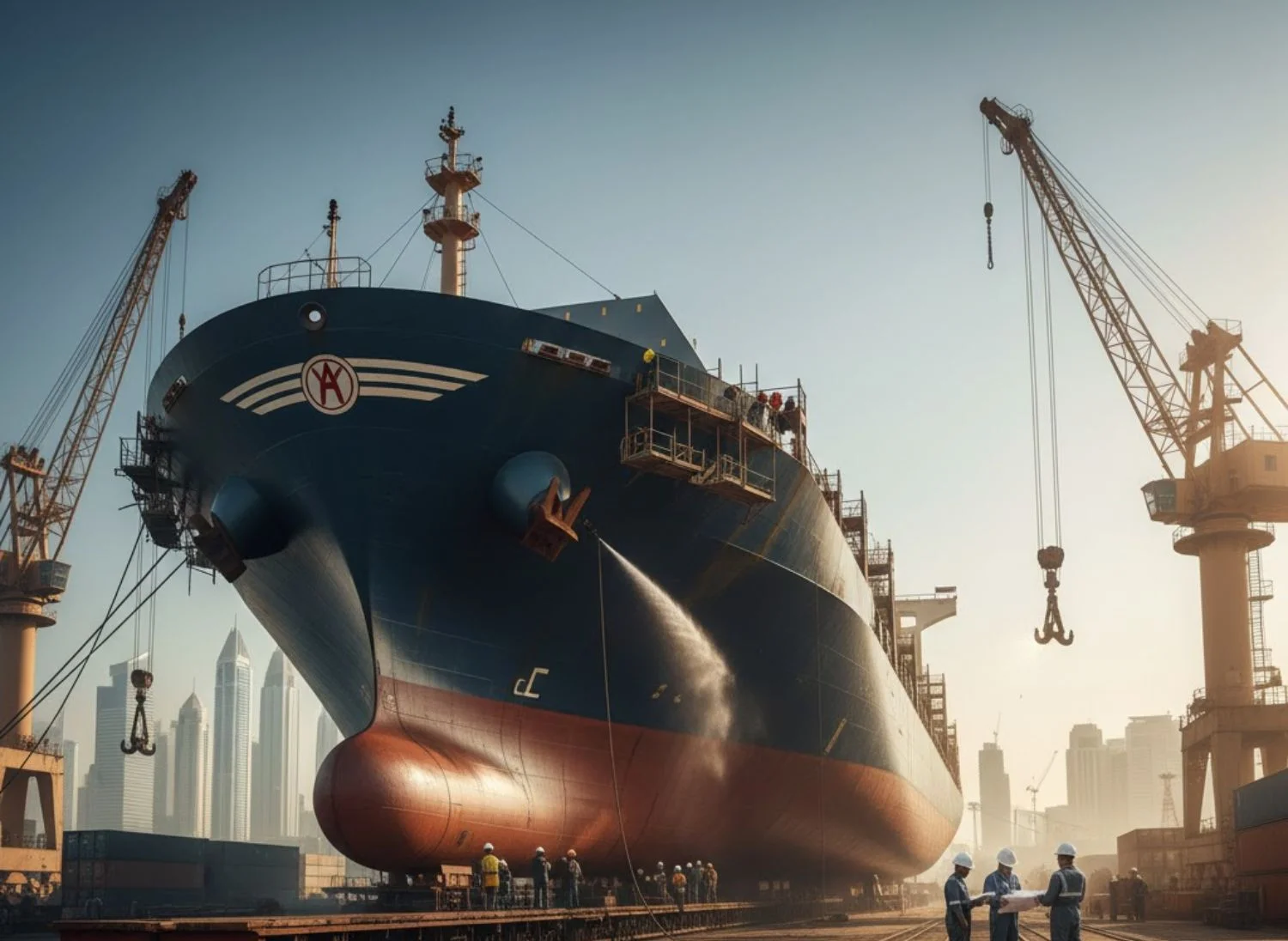
A measurable increase in fuel consumption without changes in cargo load, weather conditions, or route profile is a reliable indicator of hull fouling, propeller surface deterioration, or a reduction in engine thermal efficiency. In UAE waters, warm temperatures accelerate biological fouling growth on hull surfaces and propeller blades, increasing hydrodynamic resistance and fuel burn. An underwater inspection followed by propeller polishing or a hull scrub can recover efficiency and deliver immediate fuel cost savings.
3. Visible Structural Corrosion or Cracking
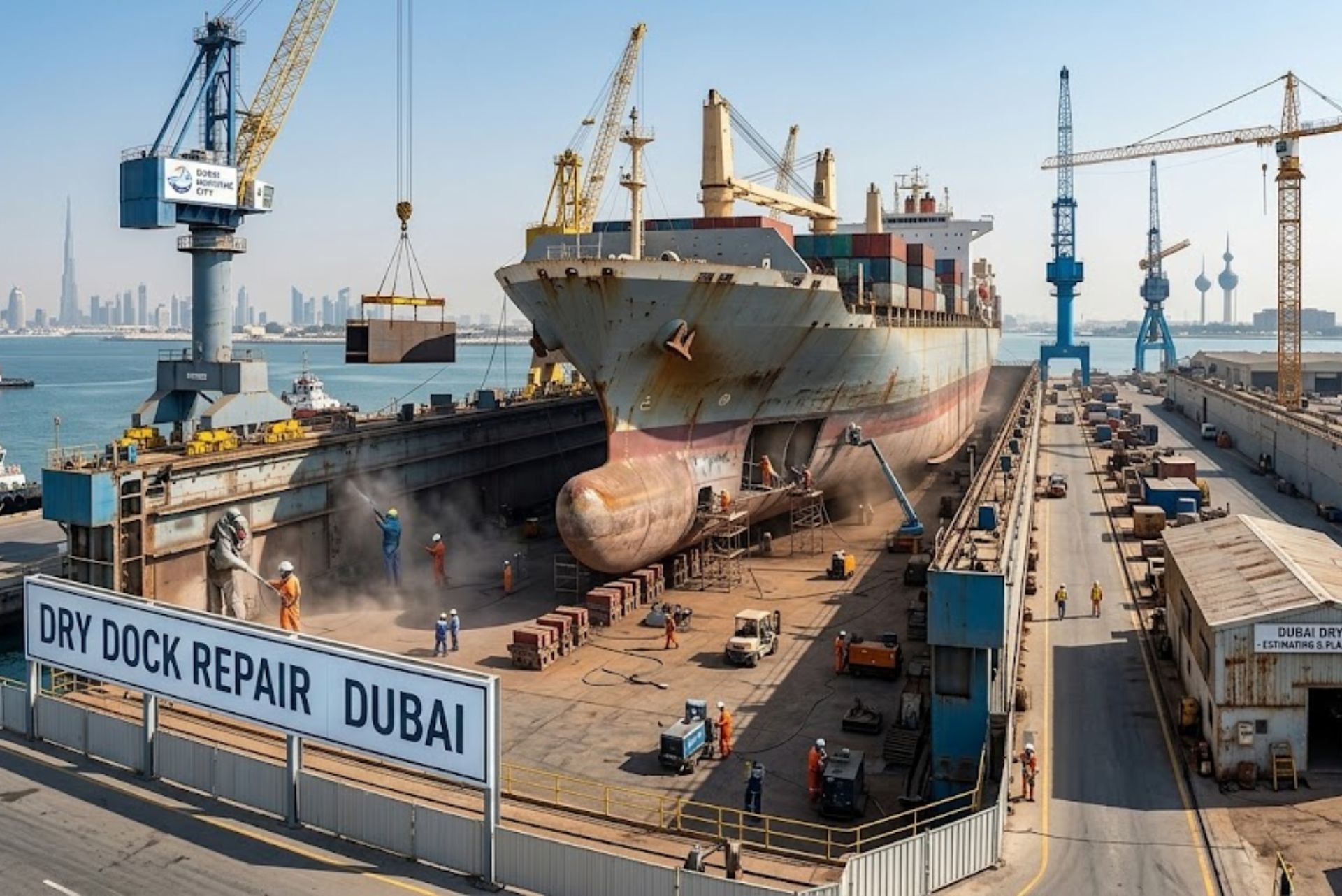
Surface rust is a natural consequence of vessel ageing, but deep corrosion pitting, extensive coating failure, or — critically — visible cracking in deck plates, structural frames, tank boundaries, or the hull envelope requires immediate ship repair assessment. The Arabian Gulf’s high-salinity, high-temperature environment accelerates corrosion rates significantly above those experienced in temperate waters. Vessels exhibiting structural deficiencies are at risk of class society non-compliance notices and Port State Control detention at UAE ports including Jebel Ali and Fujairah.
4. Hydraulic System Leaks or Pressure Anomalies
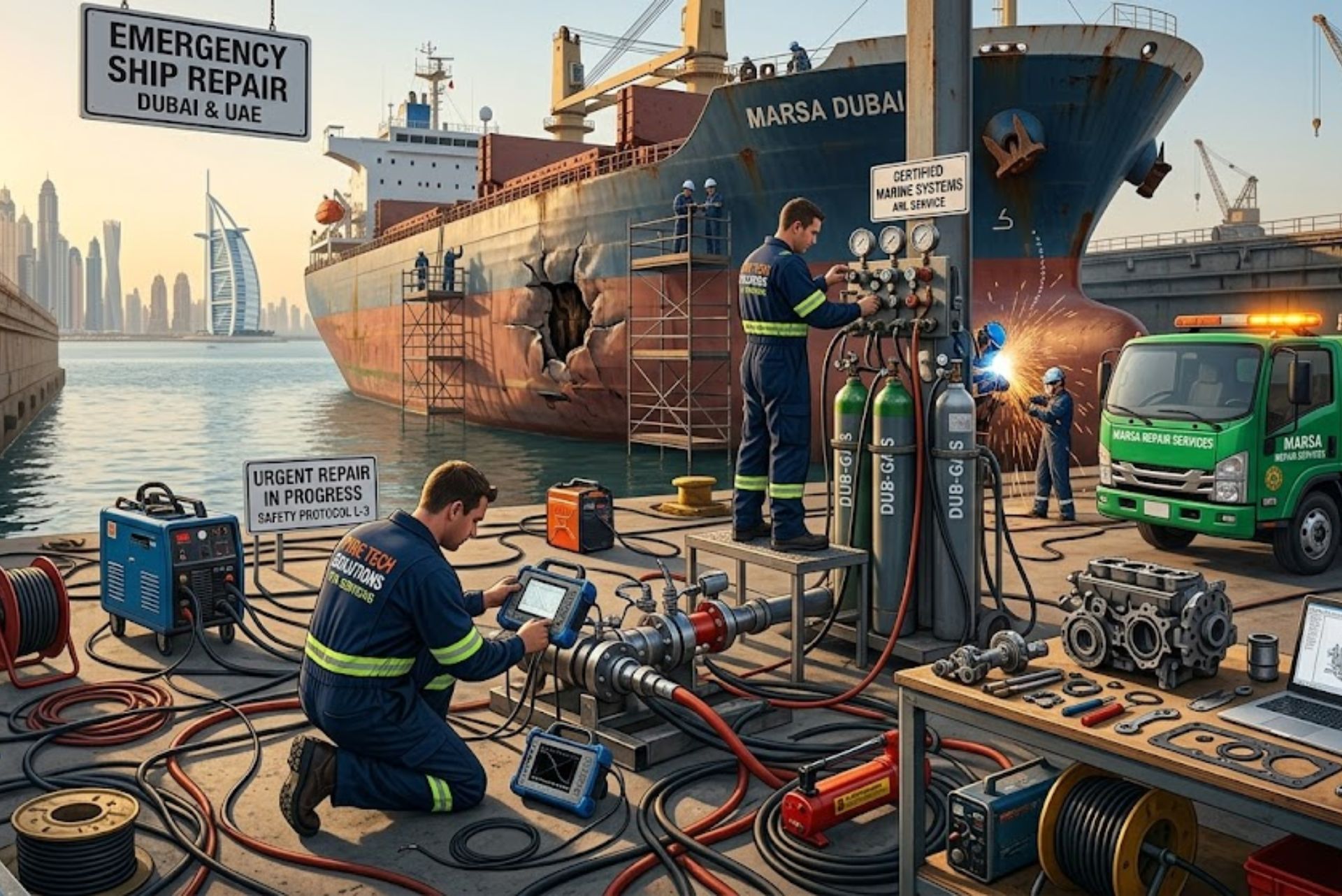
Hydraulic systems are integral to hatch cover operation, crane function, steering gear, stabilisers, and ramp systems on modern commercial vessels. A persistent hydraulic fluid leak, an unexplained pressure drop, or erratic actuator behaviour indicates seal deterioration, pipe fatigue, or component failure within the hydraulic circuit. Left unaddressed, hydraulic failures can immobilise cargo handling equipment and result in significant commercial losses at UAE terminals. Arcship’s marine mechanical solutions team can diagnose and rectify hydraulic system defects rapidly at Al Jaddaf or at vessel berth.
5. Electrical or Navigation Equipment Faults
Electrical system anomalies — including repeated circuit breaker trips, insulation resistance failures below class limits, battery bank degradation, or navigation equipment malfunctions — represent both a safety risk and a regulatory compliance concern. Under SOLAS requirements, navigation and electrical systems must be maintained in fully operational condition at all times. Port State Control officers at UAE ports are trained to identify non-compliant electrical systems, and deficiencies can result in vessel detentions with significant commercial consequences.
6. Ballast Water or Bilge System Irregularities
Anomalies in ballast water management systems — including pump failures, control system faults, or BWTS non-compliance with D-2 standards — carry direct regulatory implications under the IMO Ballast Water Management Convention. Similarly, bilge system failures or oil-water separator non-compliance can expose vessel operators to MARPOL violations and substantial Port Authority fines in the UAE. Arcship provides rapid diagnosis and repair of ballast and bilge system defects, helping operators maintain environmental compliance and avoid regulatory sanctions.
7. Accumulation of Overdue Planned Maintenance Items
One of the most common and preventable causes of vessel breakdown and class non-conformity is the progressive accumulation of overdue Planned Maintenance System (PMS) items. Operational pressure, crew workload, and spare part lead times can all contribute to maintenance deferrals that eventually manifest as system failures, class survey deficiencies, or Port State Control observations. Arcship regularly supports vessel operators in clearing overdue PMS backlogs during port calls at Dubai, providing the specialist technical resources that an onboard crew alone cannot always deliver.
Act Before Dubai Port State Control Does
UAE ports — particularly Jebel Ali and Fujairah — have a well-established reputation for rigorous Port State Control inspection regimes. Vessels presenting with technical deficiencies face the prospect of detention, rectification requirements, and daily off-hire losses that far exceed the cost of proactive repair and maintenance.
If your vessel is exhibiting any of the warning signs described above, contact Arcship immediately. Our team at Al Jaddaf Drydock World is available 24/7 to provide rapid technical assessment, class-approved repair solutions, and emergency response across all UAE ports and anchorages. Call us at +971 555 787 949 or email info@arcship.ae.