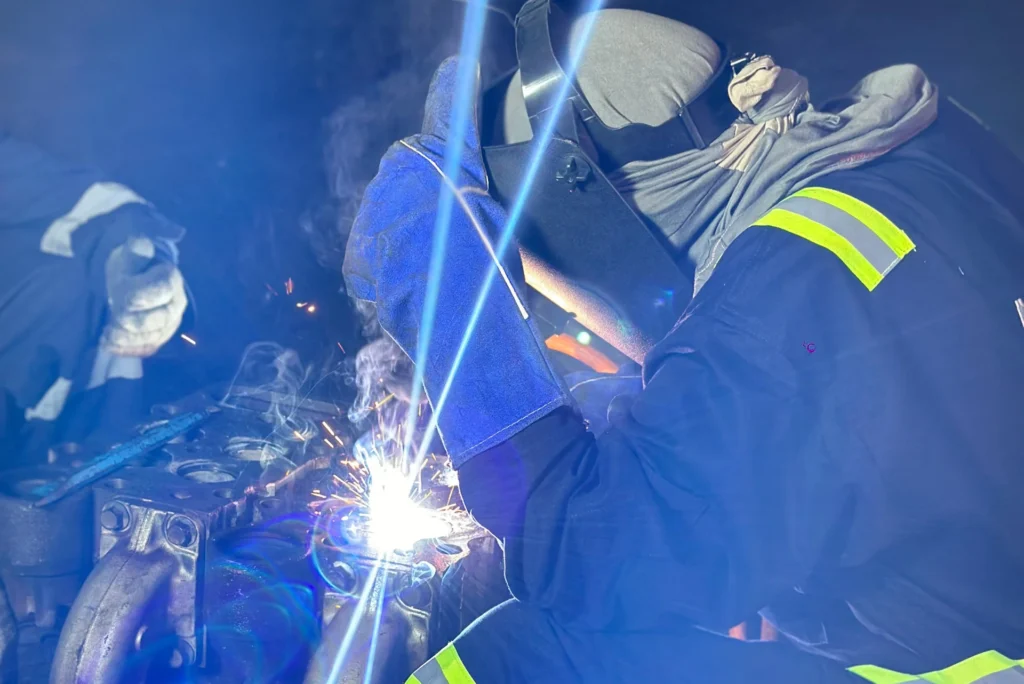
Marine machinery does not choose a convenient moment to need attention, but a well-run technical department can decide when most of that work happens. On the Omani coast, where vessels call at ports spread along the Gulf of Oman and the Arabian Sea, the difference between a planned overhaul and an emergency repair is often the difference between a controlled cost and a lost voyage. ARCSHIP provides mobile engine overhauling attendance to shipowners and operators whose ships trade through Omani waters, covering both the scheduled and the unscheduled end of that spectrum.
Planned Overhaul Versus Emergency Repair
A planned overhaul is timed against something predictable: main-engine running hours, the maker's recommended time-between-overhauls, or a classification survey window that is already on the calendar. Because the date is known, spares can be pre-ordered, attendance can be booked, and the vessel's own engineers can be briefed. An emergency or breakdown repair is the opposite. A cracked liner, a seized bearing, a turbocharger surge or a fuel-pump failure forces the work to the front of the queue, usually with the ship either drifting on hire or berthed at a port where the stay was never meant to include machinery work. Both jobs use the same skills, but the planned one protects the schedule while the emergency one recovers it.
Scope of Machinery Covered
Engine work at a port call rarely stays confined to a single unit, so ARCSHIP's marine mechanical solutions reach across the machinery space. Typical scope includes:
- Two-stroke and four-stroke main engines, and auxiliary generator engines
- Pistons, liners, cylinder heads, main and bottom-end bearings, and crankshaft deflection measurement
- Turbochargers, fuel injection equipment, pumps, compressors and purifiers
- Heat exchangers, coolers and steering gear
- In-situ machining and laser alignment where the job calls for on-board metalwork rather than removal
Bringing these under one attending team matters, because a top overhaul that reveals a worn bearing or an out-of-tolerance deflection should not have to wait for a second mobilisation.
Planning Around Class and the Maker
The best planned overhauls are built around the vessel's survey position. Where machinery is enrolled in a Continuous Machinery Survey (CMS), individual items fall due on a rolling cycle, and timing an overhaul so that the opened-up component also clears its CMS item means one dismantling earns two results: the maintenance and the survey credit. That only works if the maker's TBO, the surveyor's attendance and the spares delivery are lined up in advance.
An overhaul that is opened, measured, refitted and documented for class in a single attendance is worth far more than the same metal work done blind, because the report is what converts the effort into a survey credit the ship can carry forward.
Pre-ordering genuine or approved spares against the port call, and preparing a clear dossier of clearances and measurements, is what lets the attending surveyor sign the item rather than defer it.
Riding Squads and Voyage Repairs
Omani port stays are frequently too short for a full overhaul, particularly at busy container and bulk terminals. In those cases ARCSHIP can put engineers aboard as a riding squad, working the machinery on passage between Omani ports or on the leg out of the region, so the ship keeps trading while the job progresses. Voyage repair suits work that can be staged safely at sea, such as unit overhauls on a multi-engine set or progressive turbocharger and pump servicing, and it removes the pressure to compress everything into a single berth.
Why the Omani Coast Suits This Work
Oman's commercial ports sit outside the Strait of Hormuz, on the Gulf of Oman and Arabian Sea. That geography is a practical advantage: an engine job can be scheduled at Muscat's Port Sultan Qaboos, Sohar, Sur, Duqm, Salalah or Khasab without committing the vessel to a Hormuz transit purely to reach a repair point. Salalah's position as a major transshipment hub means dense liner traffic already passes the coast, so an attendance can often be matched to a call the ship was making anyway. For heavier docking work beyond the reach of afloat repair, the region also holds real infrastructure: the Oman Drydock Company graving docks at Duqm and the industrial capacity around Sohar are established third-party facilities, useful context when a job outgrows a berth. One consistent variable to plan for is spares logistics and customs clearance through the Omani port of call, which should be started as early as the attendance itself.
A typical ARCSHIP engine attendance at an Omani port follows a clear sequence: survey of wear-down and running clearances, dismantling and measurement of the affected components, renewal or refit of pistons, bearings, injection gear or coolers as found, reassembly to the maker's tolerances, support during the function test or sea trial, and a written report suitable for the vessel's records and for class. That report, tied back to the ship's ongoing ship management plan, is what turns a single port call into a documented maintenance milestone.