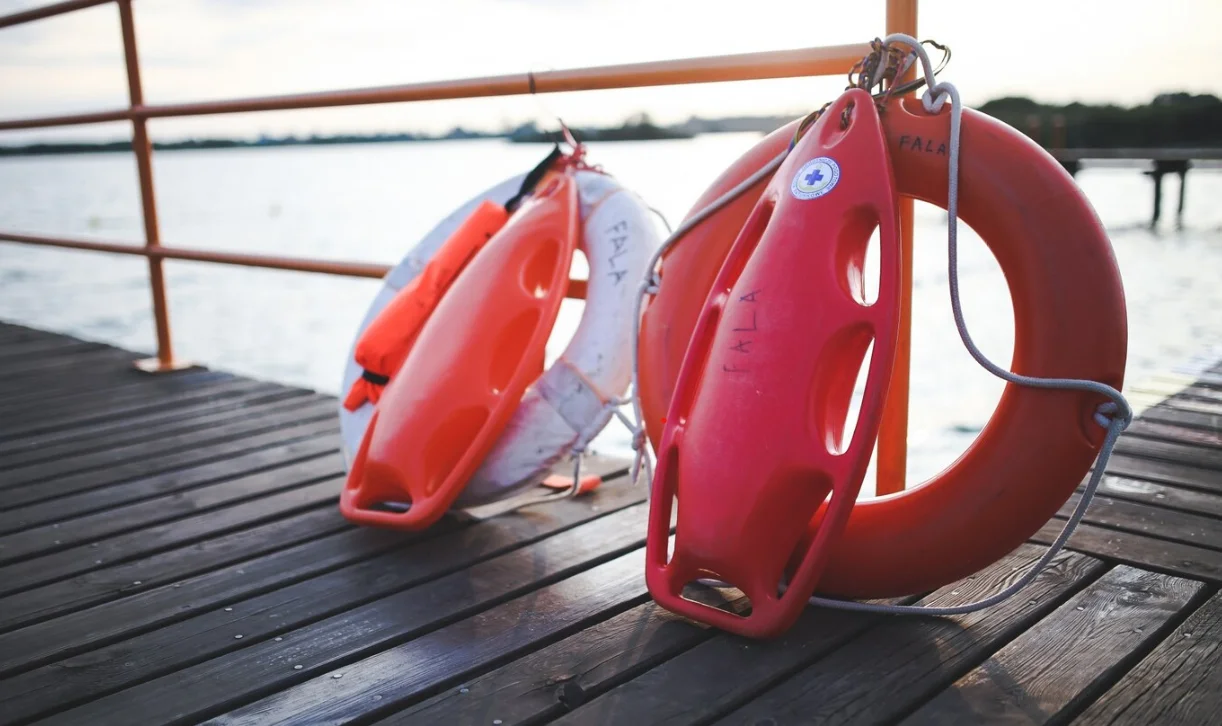
Every vessel calling at an Omani port carries a defined set of survival and firefighting equipment that must remain certified, serviceable and ready at all times. Marine safety equipment services cover the inspection, testing, servicing and recertification of that equipment so a ship stays compliant with SOLAS and passes port-state control without delay. For operators trading through the Gulf of Oman and Arabian Sea, keeping this work current is the difference between a routine port call and a costly detention.
What Marine Safety Equipment Services Cover
The term groups together two closely related disciplines: life-saving appliances (LSA) and fire-fighting appliances (FFA). Both are governed by mandatory instruments under SOLAS, both require periodic servicing by competent technicians, and both generate certificates that surveyors and port-state control officers will ask to see. Treating them as a single, coordinated attendance rather than two separate jobs saves the vessel time, reduces deviation and keeps the paperwork aligned.
Life-Saving Appliances (LSA)
LSA is everything on board that keeps people alive if the ship has to be abandoned or a crew member goes into the water. This covers survival craft and their launching gear: lifeboats and rescue boats, davits, winches and release hooks, along with the inflatable liferafts and their hydrostatic release units. It also covers personal equipment such as lifejackets, immersion suits and thermal protective aids, plus distress and location equipment including EPIRBs, SARTs and pyrotechnics with their fixed expiry dates. Davit load-testing, liferaft annual servicing and lifeboat on-load release maintenance are the items most often flagged during inspection.
Fire-Fighting Appliances (FFA)
FFA covers detection, containment and extinguishing of fire. This includes fixed systems such as CO2 flooding for engine rooms and cargo spaces, foam and water-mist installations, together with the portable and semi-portable extinguishers distributed throughout the vessel. It extends to fire hoses, nozzles and hydrants, fire and smoke detection and alarm circuits, self-contained breathing apparatus, and complete fireman's outfits. Weighing CO2 cylinders, pressure-testing hoses, refilling extinguishers and functionally testing detection loops all fall under a standard FFA attendance.
The Compliance Framework and Port-State Control
Servicing is not discretionary. It follows a defined hierarchy of rules: SOLAS Chapters II-2 and III, the LSA Code, the FSS Code for fire safety systems, MARPOL where oily-water and pollution equipment overlaps, plus each manufacturer's maker instructions and the requirements of the vessel's flag state. Work completed by an approved service station produces certificates that become part of the ship's statutory record.
This matters directly in Oman. The Sultanate is a member of the Indian Ocean Memorandum of Understanding (IOMOU) on Port State Control, and inspectors at Omani ports check LSA and FFA condition closely because deficiencies here are among the most common grounds for detention worldwide. Expired liferaft certificates, undersized extinguisher charges, seized release gear or a lapsed breathing-apparatus test can each hold a ship alongside.
A vessel with current LSA and FFA certificates and visibly maintained equipment gives a port-state control officer little reason to escalate. One with overdue servicing invites a detailed inspection, and every additional deficiency raises the risk of detention.
A typical safety-equipment attendance or pre-inspection covers:
- Liferaft and inflatable equipment annual servicing, with HRU checks
- Lifeboat, rescue boat and davit inspection, including on-load release maintenance and load-testing
- Lifejacket, immersion suit and lifebuoy condition survey against certificate counts
- Extinguisher servicing and refilling, plus CO2 and foam system inspection
- Fire hose pressure-testing, hydrant and nozzle checks
- Breathing apparatus servicing and fireman's outfit verification
- Detection and alarm functional testing, and EPIRB and pyrotechnic expiry review
- Cross-checking every item against SOLAS scales and issuing certificates on completion
Calibration and ARCSHIP Attendance in Oman
Safety equipment servicing sits alongside instrument calibration. Portable gas detectors, fixed gas-monitoring heads, oxygen and multi-gas meters and other safety instruments drift over time and need periodic calibration against traceable standards, ideally scheduled into the same visit as LSA and FFA work so nothing is missed. Any items found beyond economical repair can be replaced from a range of SOLAS-approved safety products during the same attendance.
ARCSHIP provides mobile safety-equipment attendance at Oman's commercial ports: Muscat (Port Sultan Qaboos), the deep-water industrial hubs at Sohar and Duqm, Sur, the major transshipment terminal at Salalah, and Khasab in Musandam. Because these ports sit on the Gulf of Oman and Arabian Sea outside the Strait of Hormuz, they suit vessels on Indian Ocean and main Asia to Europe trade routes. Combining LSA servicing, FFA servicing, gas-detector calibration and safety-product supply into one coordinated visit lets a ship clear its safety scope without deviation or a second port call.