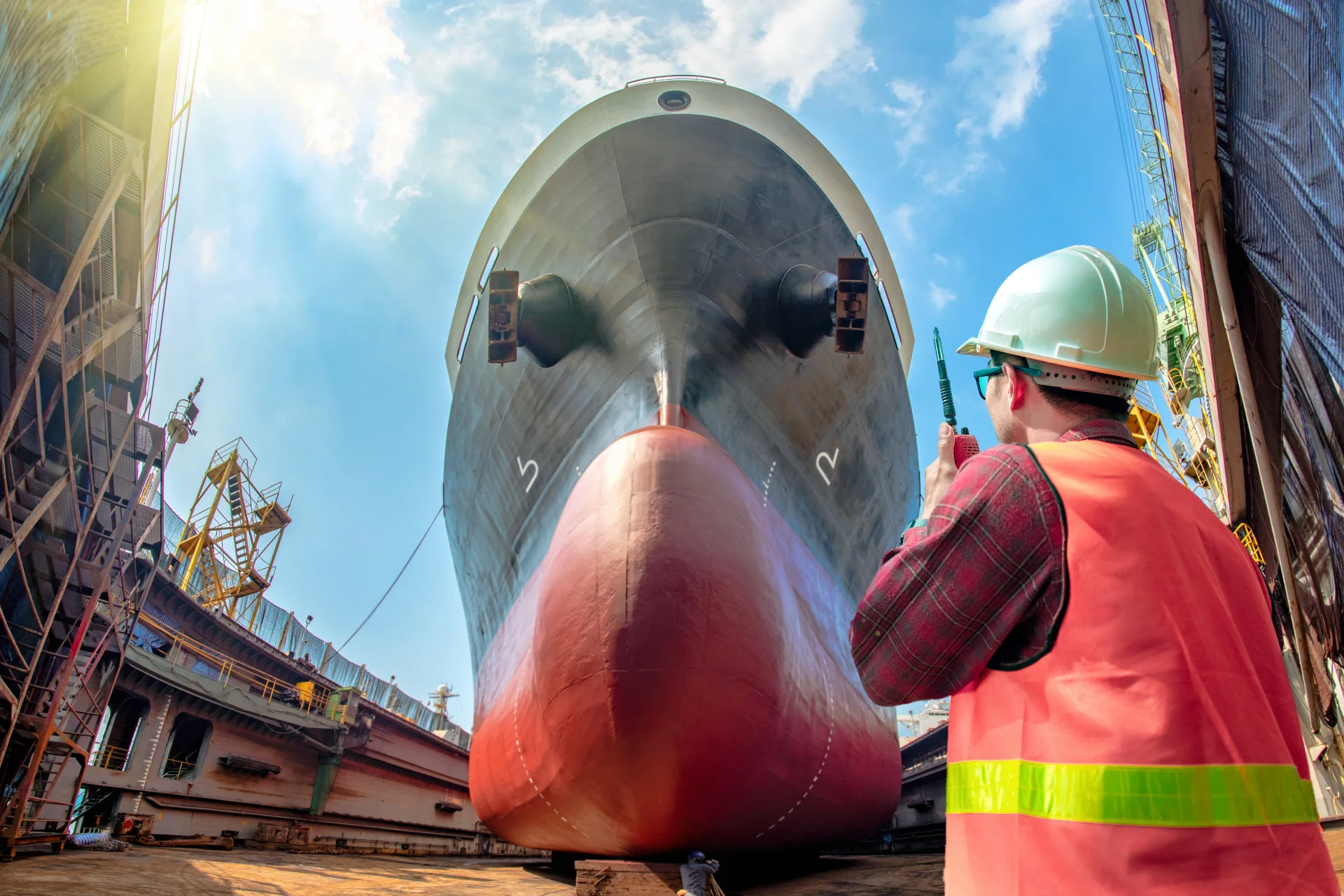
Ship repair rarely arrives on a convenient schedule. A survey finding, a bearing that runs hot on passage, or a docking window falling due can all force a decision, and where that repair is carried out has a direct effect on cost, class status, and time off-hire. This guide sets out how owners and operators can plan a repair call in Oman, what work is realistically done afloat versus in dry-dock, and how ARCSHIP supports vessels calling at Omani ports.
Afloat repair versus dry-dock: choosing the mode
Ship repair splits into two broad modes. Afloat or alongside repair is carried out with the vessel waterborne at a commercial berth or at anchorage, and it covers almost everything above the waterline: machinery overhauls, piping and hydraulics, electrical and automation, steel renewal in tanks and holds, and voyage repairs handled by a riding squad while the ship continues trading. Dry-dock repair is required whenever work reaches below the waterline, where the underwater hull must be exposed for blasting and coating, and where the tailshaft, rudder, stern tube, propeller, and sea valves can only be opened up out of the water. Getting this distinction right early is the single biggest driver of a sensible repair plan, because it decides whether you need a docking slot at all or whether the scope can be closed alongside.
Types of ship repair work
A typical repair call combines several trades running in parallel. Coordinating them under one contractor keeps interfaces clean and avoids the gaps that appear when steel, machinery, and coating crews report to different parties. Common work packages include:
- Steel renewal and class-driven steelwork, from cropping and renewing wasted plate to gauging and repairing structure flagged at survey
- Machinery repair and overhaul, including main and auxiliary engines, pumps, compressors, and deck machinery, closely tied to our marine mechanical solutions and engine overhauling work
- Piping and hydraulics, covering sea water and ballast lines, fuel and lube systems, and hydraulic power packs
- Electrical and automation, from cabling and switchboards to alarm, monitoring, and control systems
- Riding-squad voyage repairs that let non-critical work continue while the vessel remains on passage
- Superstructure and outfitting, including accommodation, deck fittings, and structural repairs above deck
- Staging, blasting, and painting support so surface preparation and coating are done to specification
Working to class
Most repair scopes are ultimately driven by the classification society. Survey findings, recommendations, and conditions of class set the work list, and the way a repair is documented decides whether it clears or drags on. Pre-survey planning matters here: confirming spares readiness, agreeing the repair method with the attending surveyor in advance, and building a repair dossier of procedures, material certificates, and NDT records that class can approve without repeated back-and-forth. Coordinating the attending surveyor's visits so that staging, gas-freeing, and access are ready when they arrive avoids the costly situation of a surveyor standing by while the ship is not.
A repair that is technically finished but poorly documented is not finished in the eyes of class. Plan the paperwork with the same care as the steel, and the survey closes on the first attendance rather than the third.
Why Oman works for a repair call
Oman sits on the Gulf of Oman and the Arabian Sea, outside the Strait of Hormuz, which lets owners plan a repair call without committing the vessel to a Hormuz transit while keeping it close to the main east-west shipping lanes. The country also has substantial ship-repair infrastructure. The Oman Drydock Company (ODC) operates large graving docks at the Port of Duqm and is one of the region's biggest ship-repair and conversion yards, while Sohar is a major industrial deep-water port; both serve as regional facilities where docking work can be arranged. Salalah is a leading container transshipment hub on the Arabian Sea, and Sur, Muscat's Port Sultan Qaboos, and Khasab in Musandam complete a coastline that gives operators real flexibility on where to bring a vessel alongside. ARCSHIP works as the marine-services contractor at these Omani ports, providing afloat repair, riding squads, and machinery and steel work, and coordinating with third-party yards such as ODC or Sohar when a docking is required. Reliable repair support also protects statutory readiness, from safe machinery operation to a vessel's life-saving appliance maintenance.
Scoping the repair call to control cost and off-hire
The cost of a repair call is decided before the first spanner turns. A disciplined scope starts with a clear defect list, cross-checked against class status so that survey-critical items are separated from deferrable ones. From there, the two variables that most often blow a budget are spares lead time and port selection: ordering long-lead spares early and picking a port whose facilities and labour match the work avoids the vessel waiting on parts or the wrong quayside. Finally, agreeing an attendance window with class, the yard, and the contractor keeps everyone converging on the same dates, which is what actually contains off-hire. Owners running a full technical program often fold this planning into their wider ship management arrangements so that repair, survey, and trading schedules are managed as one.