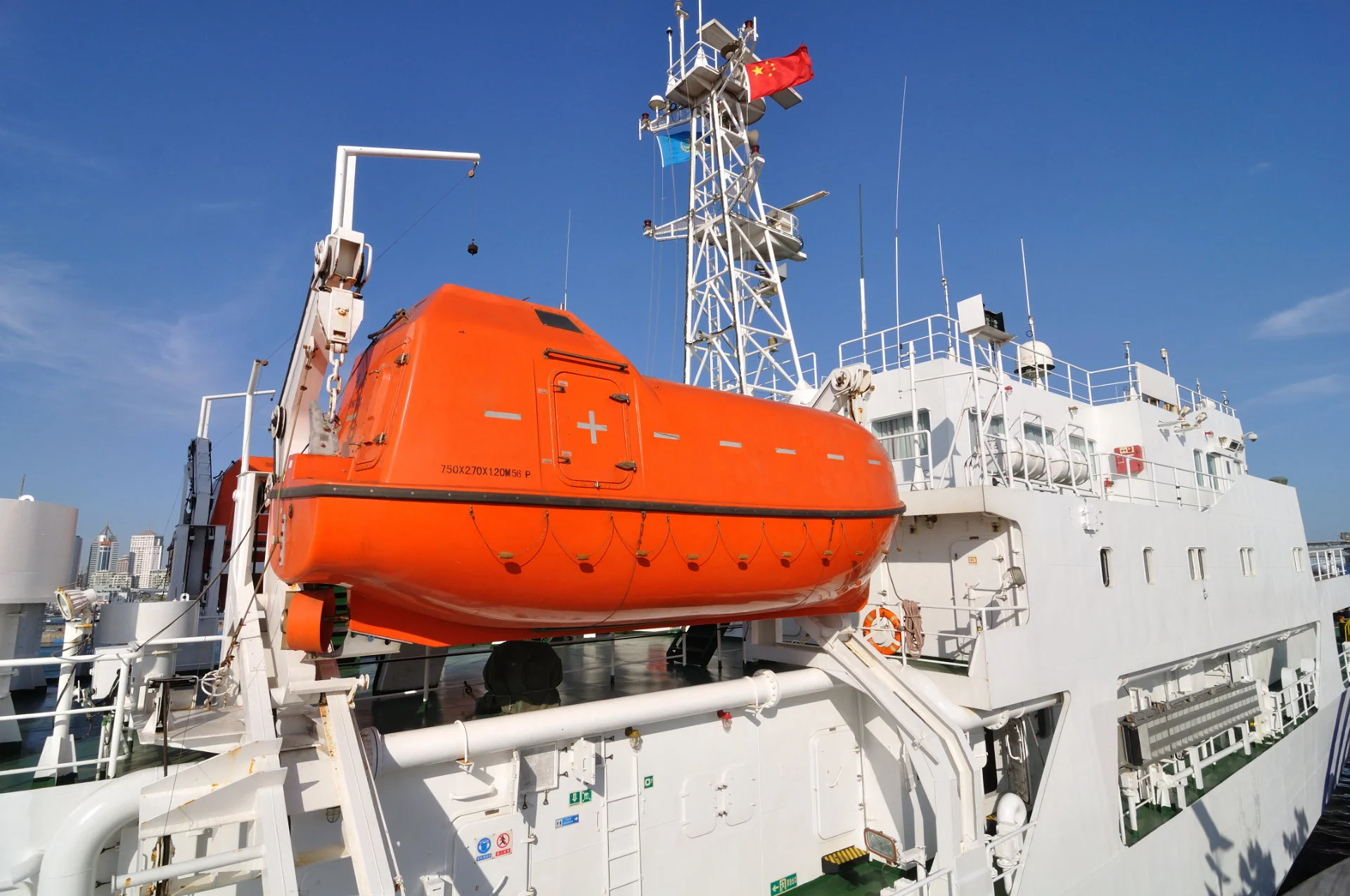
Life-saving appliances are the last line of defence when everything else on a ship has failed, and a surveyor knows it. This guide sets out the SOLAS servicing intervals that apply to LSA equipment, explains why an expired certificate is one of the fastest routes to a port-state-control detention, and shows how vessels calling in Oman can close out short-interval, annual and five-yearly work in a single, convenient port attendance.
Why LSA compliance decides your next port call
Under SOLAS Chapter III and the International LSA Code, every survival and rescue appliance carried on board must be examined, function-tested and certified at defined intervals by competent, and where required approved, personnel. When a certificate lapses or a required servicing station repack is overdue, the deficiency is objective, it is documented, and it is difficult to argue away. Lapsed LSA certification consistently ranks among the leading causes of detention because an inspector does not need to interpret anything: the sticker either shows a valid date or it does not.
Oman is a member of the Indian Ocean MoU on Port State Control, so vessels calling at Omani ports are inspected against the same regional regime that governs much of the wider region. Keeping life-saving appliance servicing current is therefore not paperwork housekeeping, it is the difference between a clean inspection and a vessel held alongside.
A lifeboat that has never been load-tested is not a lifeboat, it is a liability with davits.
What counts as life-saving appliance equipment
The scope is broader than most crews assume. A full LSA regime covers the launching and survival craft as well as every item of personal and distress equipment, including:
- Lifeboats and rescue boats, including fast rescue boats
- Davits, winches and other launching appliances
- On-load and off-load release gear and hydrostatic interlocks
- Inflatable and rigid liferafts
- Marine evacuation systems
- Lifebuoys, lifejackets and immersion suits
- EPIRBs, SARTs and pyrotechnic distress signals
Because release gear, davits and survival craft are mechanically interdependent, a fault in one item often signals wider wear, which is why the thorough examinations below are treated as a system rather than a checklist of isolated parts.
Servicing intervals at a glance
SOLAS builds LSA maintenance around nested cycles: frequent crew checks, an annual professional examination, and heavier engineering tests every five years. In practical terms:
- Weekly and monthly: crew visual checks, routine running of lifeboat engines, inventory checks and inspection of launching appliances and gear
- Annual: thorough examination and function testing of lifeboats, rescue boats, davits and release gear, plus servicing of liferafts, lifejackets and inflatable equipment at approved shore stations
- Five-yearly: load testing of davits, winches and survival craft, dynamic winch brake tests and overload testing of launching appliances
- As required: re-certification or replacement of pyrotechnics and hydrostatic release units by expiry date, and battery renewal for EPIRBs and lights
Liferaft and inflatable servicing must be carried out at an approved station, and any measuring or test equipment used during load and brake testing should itself be under valid calibration so the recorded figures stand up to scrutiny.
The Oman advantage for scheduling survey windows
Oman's ports face the Gulf of Oman and the Arabian Sea, outside the Strait of Hormuz, which means a vessel can take a survey window in Omani waters without committing to a Hormuz transit. That geography makes the country's harbours a natural place to align a port call with a servicing due date. ARCSHIP attends vessels at Muscat (Port Sultan Qaboos), the industrial deep-water ports of Sohar and Duqm, Sur, the major transshipment hub of Salalah, and Khasab up in Musandam.
For a box boat rotating through Salalah, or a bulk or project cargo vessel working Sohar or Duqm, this is an opportunity to schedule both routine short-interval attention and heavier annual or five-yearly work during a call the ship was making anyway. Where fire-related equipment is also coming due, combining LSA with fire-fighting appliance servicing in a single attendance avoids a separate deviation and keeps both certificate sets aligned to the same cycle.
What an ARCSHIP LSA attendance includes
When ARCSHIP attends a vessel at an Omani port, the visit is planned around what is actually due so the ship leaves inspection-ready. A typical attendance covers visual and detailed inspection of survival and rescue craft, function testing of davits, winches and release gear, liferaft re-pack and inflatable servicing, and load testing where the five-yearly cycle falls due. Every attendance closes with the documentation that matters at the gangway: test certificates for each item and a clear service report identifying anything requiring follow-up.